Posted: 2nd April 2026 | Back to news feed

Maintaining an arena surface is about far more than appearance. A well-kept surface plays a vital role in horse welfare, rider safety, and protecting what is often a significant financial investment. While it may seem like a cheaper alternative to rely on makeshift solutions such as gates, tyres, pallets, or other DIY objects to “level” a surface, these shortcuts can often do more harm than good. No matter what surface type is in your arena, using a purpose-built arena leveller is the most effective way to maximise the lifespan of your arena surface.
The Importance of Surface Maintenance
According to the Equine Surfaces whitepaper by the Fédération Equestre Internationale (FEI), the surface properties of an arena directly affect the biomechanics of a horse, with the potential to cause longer-term injuries. Whether your arena is used for recreational riding or regular high-performance use, correct maintenance is paramount. Maintaining an even distribution of top layer surface is paramount to preventing inconsistent footing. If the top layer becomes compacted, a hard “crust”’ can form below, which will reduce the traction and grip of the surface, causing it to become slippery for the horse and risk potential injury. Protecting the deeper layer is just as important to prevent stones from the base surfacing to the top, and potentially causing bruising to the foot of the horse.
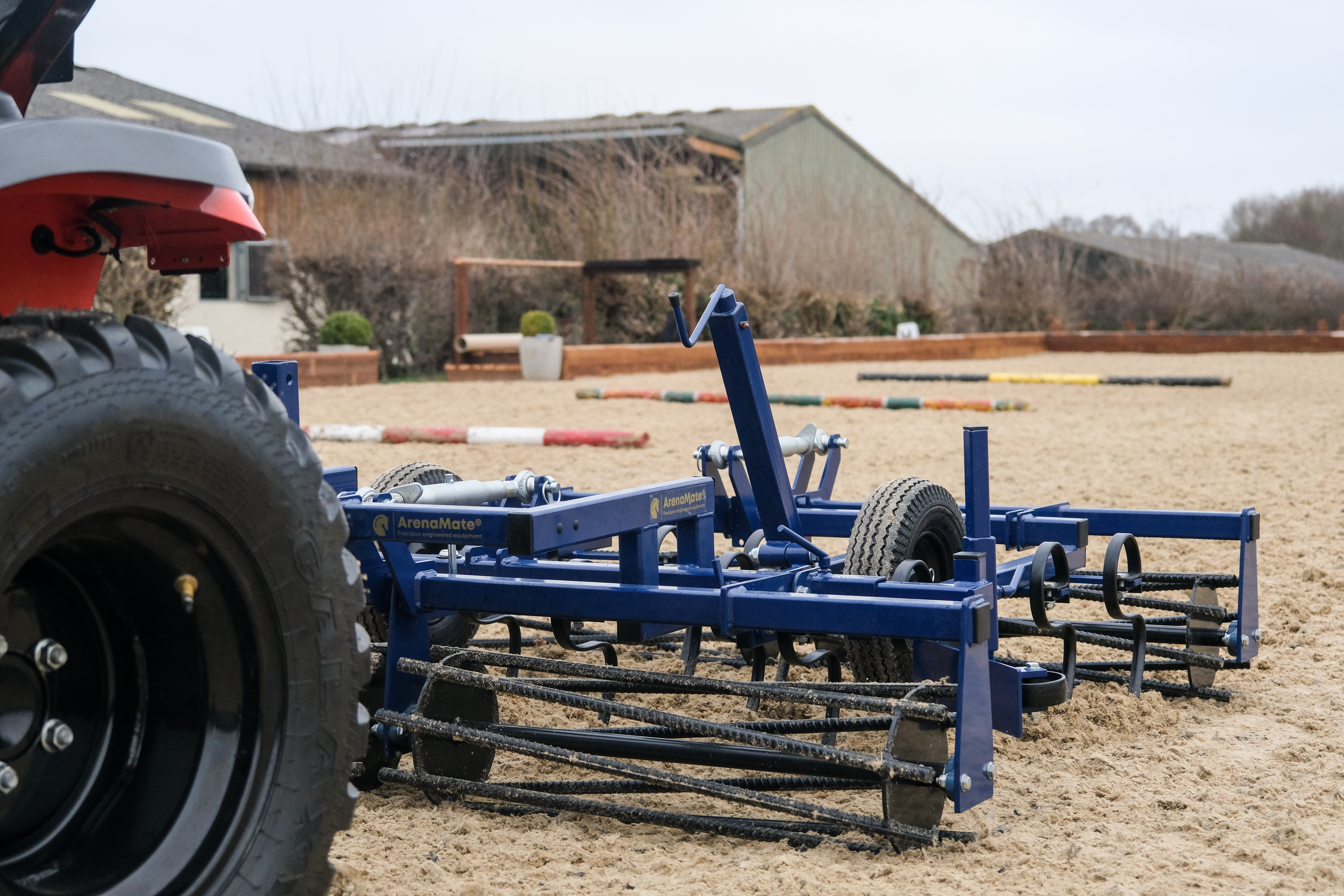
To achieve correct maintenance results, arena levellers have been purpose-built to ensure that your surface stays consistent year-round. ArenaMate® levellers provide tines to break up the surface, an adjustable side blade to pull in the edges, and either one or two rollers to consolidate the surface, depending on the model of leveller. A study conducted by Frontiers in Veterinary Science concluded that whilst arenas were regularly harrowed by participants, rolling was used relatively infrequently, indicating a lack of awareness around the importance of a combination machine. Without the use of these three major components, tines, side blades, and rollers, the condition of the arena surface will be significantly compromised, and its lifespan will be inevitably reduced.
The Hidden Damage of Using DIY Levellers
Improvised levelling tools are often rigid, uneven, and unpredictable in how they interact with the surface. Gates and tyres tend to drag material rather than redistribute it evenly, often pulling surface away from high-use areas and compacting it elsewhere. Even purpose-built chain harrows are only capable of dragging and smoothing surfaces, without any ability to redistribute deep areas.
Over time, this creates ridges, hollows, and inconsistent depth across the arena. Repeated dragging with unsuitable objects can also disturb the arena base. If the deeper geotextile layer is damaged, it can crease into folds, creating a dangerous hazard if the horse’s hoof were to get caught in it.
DIY equipment also often lacks depth control, meaning it may cut too deeply in some areas whilst barely touching others. This increases the risk of exposing the base or membrane, leading to expensive repairs and a shortened lifespan for the arena. Additionally, DIY levellers lack the precision required to closely rake around the arena edges, resulting in banking and reduced track footing.
A purpose-built arena leveller is designed to ensure the material is lifted, aerated, and redistributed evenly, maintaining a consistent depth without damaging what lies beneath. Arena maintenance is more than just levelling the surface, and simply smoothing the surface by dragging is not sufficient. While it may seem like a cheaper solution, DIY levelling objects cannot replicate the performance of an arena leveller, and in the long-term will likely cause much larger damage expenses.
How Does This Affect Your Horse
An uneven or compacted surface doesn’t just look untidy, it also directly impacts how a horse moves. Horses are highly sensitive to changes in footing and will adapt their way of going to cope with inconsistencies. Working repeatedly on a surface with deep sections, hard spots, or sudden transitions can lead to uneven limb loading and increased strain on tendons, ligaments, and joints. Over time, these compensatory movement patterns may contribute to chronic issues such as soft tissue injuries or joint soreness.
A study conducted for the Journal of Equine Veterinary Science concluded that regular use of a purpose-built arena leveller significantly improved natural hoof twist during movement. Too much resistance, or too much twisting of the hoof, caused by an uneven surface, can overload joints, tendons and ligaments, leading to potential long-term damage. Other safety concerns of a surface maintained by unsuitable “levellers” include tripping, slipping or even falling, which can be caused by surface compaction or inconsistencies.
Another study by the University of Central Lancashire found that there is a significant relationship between hoof slip and hoof penetration depth when being ridden on an arena surface, indicating that a hardened surface reduces traction and increases the risk of the horse slipping. Maintaining an evenly distributed, well-levelled surface will help support natural movement, reduce fatigue, and improve performance.
Conclusion
To conclude, the correct maintenance of an arena surface is integral to both longevity of the surface and equine welfare and performance. While makeshift levelling methods may appear initially cost-effective, they lack the precision, consistency, and protective features necessary to maintain a safe and durable footing. Investing in a purpose-built arena leveller ensures that the surface remains evenly distributed and free from unnecessary hazards, supporting natural movement, reducing the risk of injury, and preserving the arena’s lifespan. Effective, consistent maintenance is therefore not merely an aesthetic consideration, but a fundamental component of responsible equestrian management and long-term investment protection.
For more information visit arenamate.co.uk
The Equestrian Index newsfeed is compiled from articles submitted by advertising members and expresses the opinions of those members. Contributors are responsible for ensuring they have the necessary rights and permissions for all content, including text and images. Watsons Directories Ltd shall not be held liable for any inaccuracies, mis-statements, or copyright infringement therein.