Posted: 9th September 2026 | Back to news feed

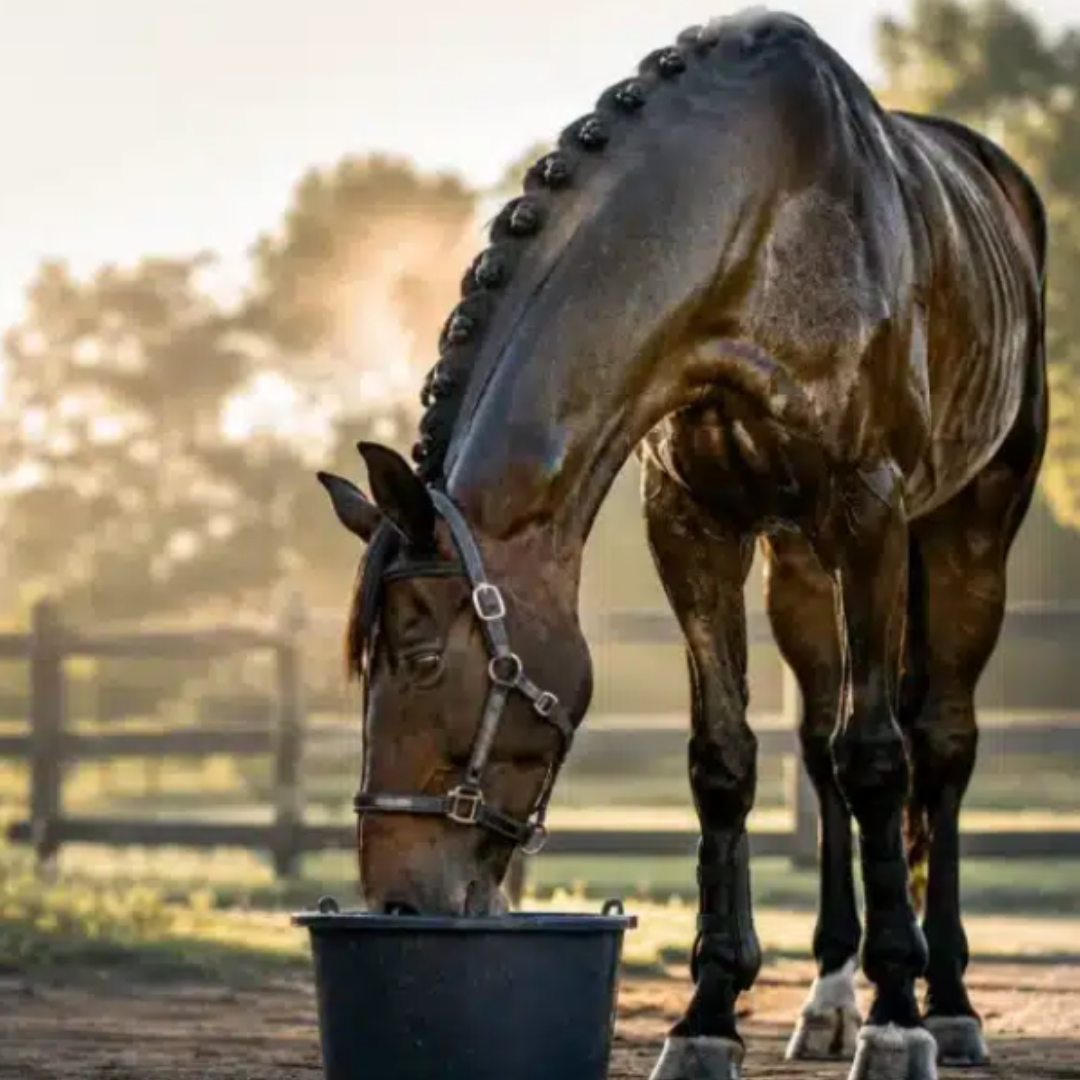
After intensive exercise, the horse’s body immediately begins the recovery process. During work, the body is placed under physical strain and requires large amounts of energy, which reduces stored energy reserves and places stress on muscles, joints, tendons, and other body systems. Proper recovery after exercise is therefore essential for maintaining a healthy, supple, and comfortable horse while also supporting long-term performance.
In this article, we explain what happens within the horse’s body during exercise, the best recovery methods, and how nutrition and supplements can support optimal recovery.
What Happens in the Horse’s Body During Exercise?
Exercise causes a variety of physiological changes throughout the horse’s body. Training stimulates muscle adaptation and development, but intensive work also places significant demands on the body.
Several systems work together during exercise to enable movement and performance, including the respiratory system, circulation, and digestive system. As workload increases, the horse’s oxygen demand rises because oxygen is required for energy production. To meet this demand, the horse breathes faster and more deeply. Respiration also plays an important role in releasing excess heat generated during exercise.
Fluid and Electrolyte Loss
When horses exercise, especially in warm conditions, they sweat and lose both fluids and electrolytes¹. Electrolytes are essential minerals that help maintain fluid balance and support normal muscle and nerve function. The greater the fluid loss through sweating, the greater the electrolyte loss¹.
Energy Production and Lactic Acid
Inside the muscle cells, energy is produced through the metabolism of nutrients. This occurs in two ways: with oxygen (aerobic respiration) or without oxygen (anaerobic respiration)².
During light to moderate work, aerobic respiration predominates. However, during very intensive exercise, oxygen supply may become insufficient, causing the body to rely more heavily on anaerobic respiration. Although this process produces energy quickly, it also creates lactic acid².
An accumulation of lactic acid lowers the pH within the muscles, contributing to muscle acidity, fatigue, and stiffness following exercise.
Impact on Tendons and Joints
Regular exercise and movement can positively support the health and homeostasis of tendons and joints³. However, excessive or repetitive overload may lead to inflammation, tendon strain, and permanent structural damage⁴.
Oxidative Stress
Intensive exercise may also increase oxidative stress within the body. During heavy work, the balance between free radicals and antioxidants can become disrupted⁵. Excess free radicals may damage tissues and cells, making antioxidant support particularly important during recovery.
As a result, a great deal happens within the horse’s body during exercise, highlighting the importance of proper recovery management.
Methods for Optimal Recovery After Exercise
Warm-Up
Effective recovery actually begins before exercise starts. A proper warm-up gradually prepares muscles, tendons, joints, circulation, and respiration for increased workload.
During the warm-up, heart rate and breathing increase progressively, allowing oxygen to be absorbed and utilised more efficiently. Research suggests that a good warm-up reduces the body’s reliance on anaerobic metabolism⁶, helping to minimise lactic acid production and reduce muscle stiffness after exercise.
Cool-Down
An effective cool-down is equally important. A cool-down allows the body to transition gradually from intense exercise back to a resting state.
This helps body temperature, breathing, and heart rate return to normal in a controlled manner, reducing the risk of muscle tightness and overexertion.
Research by Kang et al. (2012) demonstrated that active recovery, such as walking or light trotting for 15–30 minutes, supports faster removal of lactic acid⁷. Horses that walked for 30 minutes or lightly trotted for 15 minutes after intensive exercise returned to their resting heart rate within approximately 30 minutes.
By comparison, horses that either lightly trotted for too long or received no cool-down at all required around 60 minutes for full heart rate recovery.
Rest and Recovery Time
Complete recovery following intensive exercise can take up to 72 hours. Research indicates that glycogen stores within the muscles may require this amount of time to fully replenish⁸.
Glycogen is a major energy source during intensive work, and depleted glycogen reserves can lead to earlier fatigue during prolonged exercise⁸.
Rest is therefore essential following heavy exercise, although active rest appears especially beneficial. Examples include turnout, paddock time, pasture access, or in-hand walking. Studies suggest that free movement after exercise may not only support recovery but may also help reduce swelling in the legs⁹.
Housing and Recovery
Research conducted by Connysson et al. (2019) suggests that housing conditions may also influence post-exercise recovery¹⁰.
In this study, one group of horses was kept in traditional stabling with limited turnout, while another group was housed in a free-range system. Horses with greater freedom of movement demonstrated improved recovery and appetite, helping restore energy balance more efficiently.
Although further research is needed, these findings emphasise the value of regular free movement for recovery and wellbeing.
Post-Exercise Care for Optimal Recovery
During intensive exercise, a horse’s body temperature may rise to as high as 42°C. Proper cooling after work is therefore extremely important.
Part of this cooling process naturally occurs during the cool-down phase, but additional support through cold running water, cooling gels, or cooling clay may further assist recovery.
Cold water therapy remains one of the most effective methods for rapidly reducing body temperature across the body¹¹. Care products can then provide additional cooling and soothing support once the horse has been rinsed.
Nutrition and Supplements for Recovery
Nutrition plays a vital role in recovery after exercise. The horse requires adequate energy, protein, fluids, and antioxidants to restore energy reserves and support tissue repair.
Energy and Glycogen Replenishment
Energy is supplied through fats and carbohydrates. Carbohydrates are divided into:
- Non-structural carbohydrates (sugars and starches)
- Structural carbohydrates (fibre)
Sugars and starches are converted into glucose, which provides a rapidly available energy source. Excess glucose is stored within the muscles as glycogen.
Because glycogen is heavily utilised during intensive exercise, replenishing carbohydrate stores after work is essential⁸.
High-quality forage should always form the foundation of the horse’s ration. Through fermentation within the hindgut, fibre produces volatile fatty acids that contribute significantly to the horse’s daily energy supply¹².
Protein and Muscle Recovery
Proteins are equally important for recovery. Proteins contain amino acids, which are essential for muscle repair and development. Feeding sufficient high-quality protein therefore supports muscle recovery following exercise¹³.
Electrolyte Support
Heavy sweating during exercise results in electrolyte loss. Replacing these electrolytes helps maintain hydration and supports normal muscle and nerve function¹.
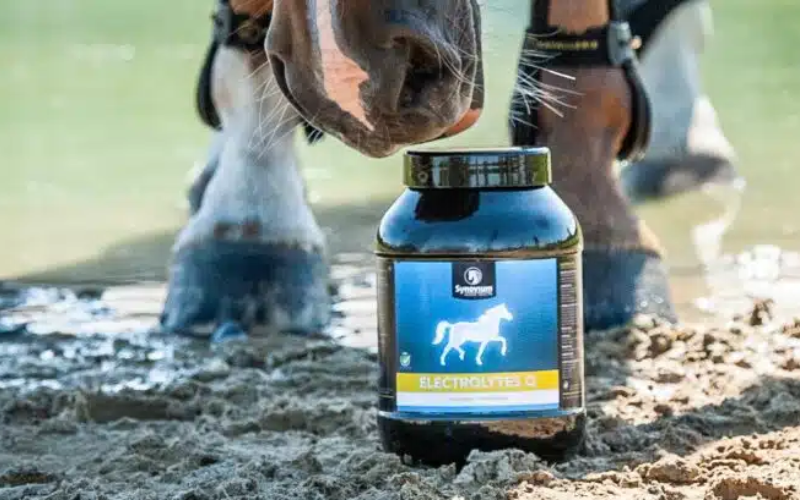
Supplements such as Synovium Electrolytes Q may help support electrolyte balance after exercise.
Antioxidant Support
Because intensive work can increase oxidative stress, antioxidant support may also be beneficial. Antioxidants help neutralise free radicals and protect body tissues from damage.
Key antioxidants include:
- MSM
- Vitamin C
- Vitamin E⁵
Supplements such as Synovium MSM Optimal-C, and Myocare-E may therefore support recovery following intensive exercise.
L-Carnitine and Muscle Support
Research also suggests that L-carnitine may positively influence recovery after strenuous exercise by supporting energy production, reducing oxidative stress, and aiding tissue recovery.
For this reason, Synovium Myobuilder contains both gamma oryzanol and L-carnitine to support muscle development and recovery.
Supporting Muscle Acidity
Supplements designed to support healthy muscle pH and lactic acid metabolism may also be useful after heavy work.
Products such as Synovium Lactaplus and Neutravet are formulated to help support muscle recovery and acid balance following exercise.
Final Thoughts
Proper recovery after exercise is essential for maintaining a healthy, fit, and supple horse. By focusing on correct warm-up and cool-down routines, allowing adequate rest and movement, and supporting the body with balanced nutrition and targeted supplementation, horses are better able to recover from exercise demands.
Effective recovery not only supports performance but may also help reduce the risk of fatigue, overload, and injury over time.
For more information visit www.synovium.co.uk
References
1. Assenza A., Bergero D., Congiu F., Tosto F., Giannetto C., Piccione G. (2014) Evaluation of serum electrolytes and blood lactate concentration during repeated maximal exercise in horse. Journal of Equine Veterinary Sciences, 34(10):1175-1180.
2. Vermeulen R., de Meeûs C., Plancke L., Boshuizen B., de Bruijn M., Delesalle C. (2017) Effects of training on equine muscle physiology and muscle adaptations in response to different training approaches. Vlaams Diergeneeskunde Tijdschrift, 86(4):224-230.
3. te Moller N.C.R., van Weeren P.R. (2017) How exercise influences equine joint homeostasis. Veterinary Journal, 222:60-67.
4. Dahlgren L.A. (2007) Pathobiology of Tendon and Ligament Injuries. Clinical Techniques in Equine Practice, 6:168-173.
5. Williams C.A. (2016) HORSE SPECIES SYMPOSIUM: The effect of oxidative stress during exercise in the horse. Journal of Animal Sciences, 94(10):4067-4075.
6. Geor R.J., McCutcheon L.J., Hinchcliff K.W. (2000) Effects of warm-up intensity on kinetics of oxygen consumption and carbon dioxide production during high-intensity exercise in horses. American Journal of Veterinary Research, 61(6):638-645.
7. Kang O.D., Ryu Y.C., Yun Y.M., Kang M.S.(2012) Effects of cooldown methods and durations on equine physiological traits following high-intensity exercise. Livestock Sciences, 143(1):70-76.
8. Lacombe V.A., Hinchcliff K.W., Kohn C.W., Devor S.T., Taylor L.E. (2004) Effects of feeding meals with various solublecarbohydrate content on muscle glycogen synthesis after exercise in horses. American Journal of Veterinary Research, 65(7):916-923.
9. Connysson M., Rhodin M., Bergh A., Jansson A. (2021) Effects of horse housing on musculoskeletal system post-exercise recovery. Comparative Exercise Physiology, 17(5):421-428.
10. Connysson M., Rhodin M., Jansson A. (2019) Effects of Horse Housing System on Energy Balance during Post-Exercise Recovery. Animals, 9(976):1-9.
11. Takahashi Y., Ohmura H., Mukai K., Shiose T., Takahashi T. (2020) A Comparison of Five Cooling Methods in Hot and Humid Environments in Thoroughbred Horses. Journal of Equine Veterinary Sciences, 91:1-5.
12. Richardson K., Murray J.A. (2016) Fibre for performance horses: A review. Journal of Animal Sciences, 46:31-39.
13. Li G., Li Z., Liu J. (2024) Amino acids regulating skeletal muscle metabolism: mechanisms of action, physical training dosage recommendations and adverse effects. Nutrition and Metabolism, 21(41):1-14.
The Equestrian Index newsfeed is compiled from articles submitted by advertising members and expresses the opinions of those members. Contributors are responsible for ensuring they have the necessary rights and permissions for all content, including text and images. Watsons Directories Ltd shall not be held liable for any inaccuracies, mis-statements, or copyright infringement therein.