Posted: 2nd June 2026 | Back to news feed

For generations, the stable has been at the centre of every equestrian yard. It is where horses are fed, groomed, monitored and managed. From a caretaker’s perspective, it makes sense. A contained, controlled environment where horses are easily accessible, and their needs can be met efficiently. But in recent years, a question has begun to surface more frequently within the industry: Are the systems we designed to care for horses truly aligned with what horses themselves need?
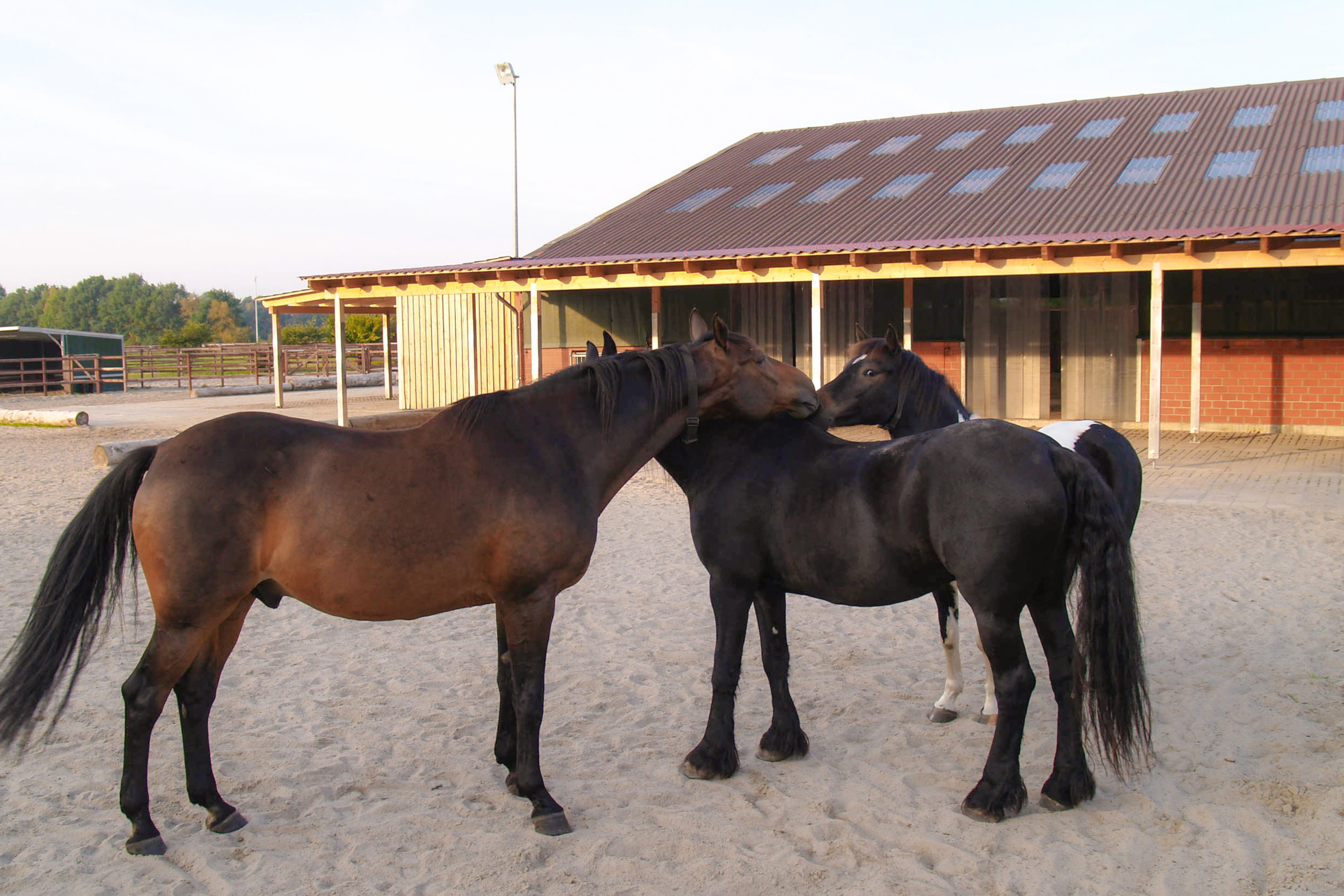
Horses evolved as highly social, mobile grazing animals. In natural conditions, they spend the majority of their day moving slowly across landscapes in herds, interacting socially and foraging almost continuously. When we place a horse in a conventional stable for long periods, we dramatically reduce those opportunities.
This does not mean the stable is inherently wrong. But it does suggest that our traditional housing systems may prioritise human convenience over the behavioural needs of the horse. As the equestrian industry continues to evolve, it may be time to ask whether the stable as we know it still represents the best possible starting point.
What Tradition Got Right
Before we dismiss traditional systems entirely, it is important to recognise why they developed in the first place. Stabling emerged as a practical solution to very real challenges. Horses needed protection from harsh weather, controlled feeding, individual care, and safe spaces for veterinary treatment or rest. In busy training environments, stables also made it possible to manage multiple horses efficiently while reducing injury risk and simplifying daily routines.
In many ways, the stable represents an attempt to do the right thing. It provides shelter, security and consistent care. For centuries, it has formed the backbone of equine management. However, tradition tends to prioritise practicality over behavioural science. Much of our understanding of equine behaviour and welfare has developed only in recent decades. As a result, some long-standing practices are now being reassessed through a more evidence-based lens.
When Care Becomes Constraint
The challenge arises when systems designed for care unintentionally restrict fundamental equine behaviours. Horses are social animals, and social contact is now widely recognised as a key component of equine welfare. Research has shown that the absence of social interaction can trigger stress responses and behavioural abnormalities such as weaving, cribbing and box-walking (Hartmann et al., 2023). Lack of social contact has even been described as one of the most significant stressors in domesticated horses, as it prevents them from engaging in natural affiliative behaviours such as mutual grooming (Hartmann et al., 2023).
Movement is another critical factor. Horses evolved to move almost constantly throughout the day, yet stabling inevitably limits this behaviour. Studies examining the impact of stabling routines have highlighted that restricted movement and reduced opportunities for grazing and interaction are commonly linked to reduced welfare states in domestic horses (Lesimple et al., 2023).
None of this means that stables should disappear. But it does highlight a growing gap between how horses evolved to live and how we currently house them.
What the Research Now Tells Us
Modern welfare science has begun to clarify what horses need to thrive within domestic environments. Three factors repeatedly appear across literature: social contact, freedom of movement, and access to forage.
Research continues to demonstrate that even relatively small design changes can influence equine welfare. For example, horses with opportunities for physical contact with neighbouring horses while stabled have been shown to display more relaxed behaviour and spend more time lying down, an important indicator of rest and sleep quality (Crawford et al., 2023).
Similarly, recent behavioural studies have shown that social contact positively influences the emotional state of stalled horses, reducing negative behaviours and improving their overall welfare (Søndergaard et al., 2025).
Studies exploring alternative stable designs have also found that housing systems allowing closer contact between neighbouring horses significantly increase social interactions without increasing injury risk (Zollinger et al., 2023).
Taken together, the research increasingly suggests that horses can cope with traditional stabling systems, but they thrive when those systems allow greater social interaction, movement and environmental complexity.
Meeting in the Middle
If traditional stabling does not fully meet horses’ behavioural needs, the question becomes, “what does a practical alternative look like?”
For most yards, completely abandoning stables is neither realistic nor desirable. Horses still require shelter, care, and safe management environments. Owners and riders also need systems that remain workable within the realities of training, competition and land availability.
The solution may lie not in abandoning the stable, but in redesigning the yard around the horse rather than the box. This means integrating movement, social interaction and turnout into the design of facilities from the outset. Rather than treating turnout as an optional extra, horse-centred yards begin with the assumption that movement and social contact are fundamental components of daily life.
In practice, this leads to layouts where stables become one element within a broader living environment rather than the primary housing system.
The Rise of Hybrid Housing
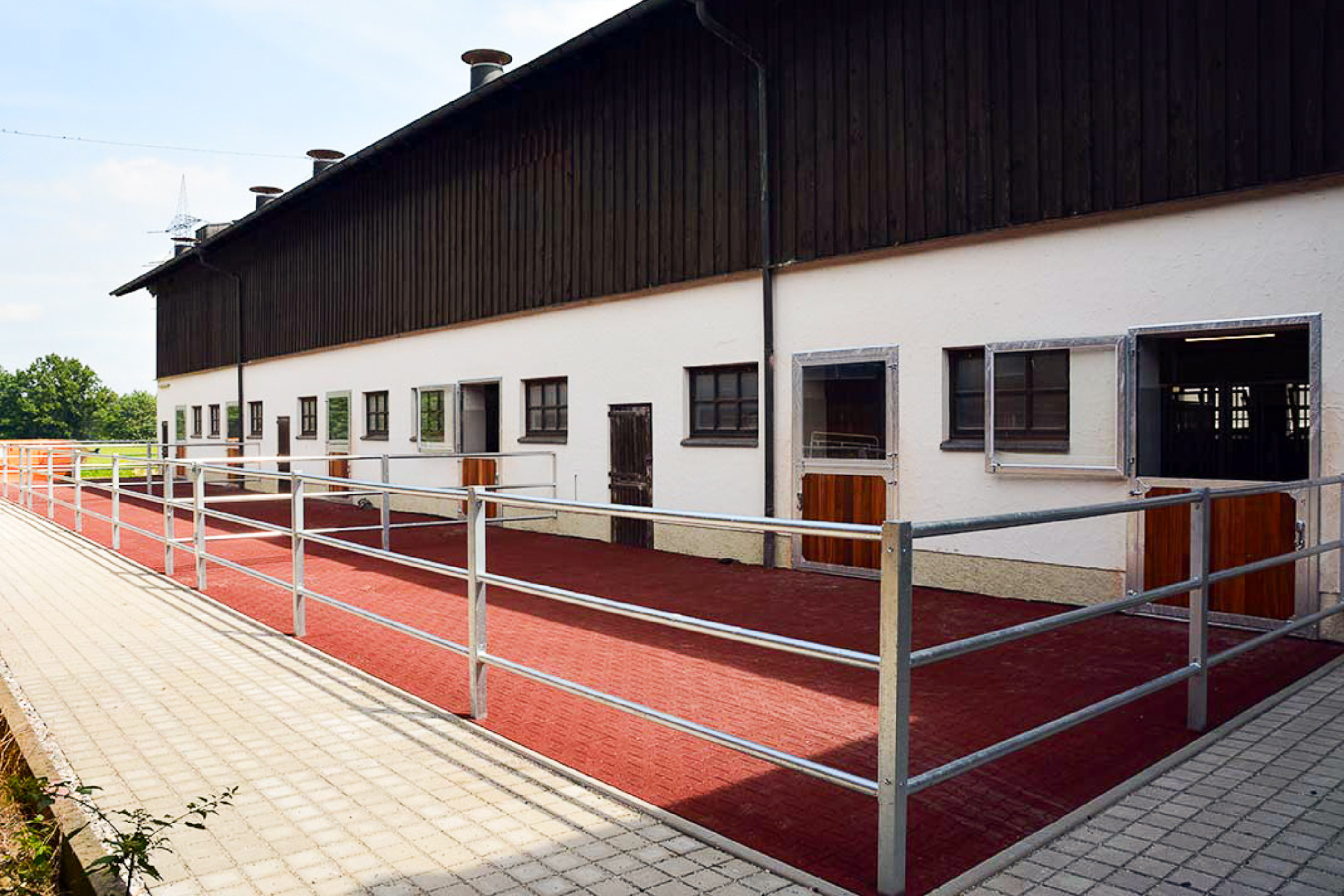
Across the industry, we are beginning to see the emergence of hybrid systems that attempt to balance welfare with practical management. Adjoining pens are one example gaining traction. By connecting stables to individual or shared outdoor pens, horses retain shelter and structured feeding while also gaining the ability to move more freely and interact with neighbouring horses. The stable becomes a base rather than a boundary.
Similarly, track systems, where horses live in groups on looping tracks around pasture, are increasingly used to encourage continuous movement and natural foraging behaviour while still allowing controlled feeding and monitoring.
Both approaches reflect a broader shift in thinking, designing environments that give horses more choice. Importantly, this shift is not purely philosophical. As research into equine welfare continues to develop, it increasingly supports systems that prioritise movement, social stability and environmental complexity.
From our perspective, the conversation around horse housing is no longer about whether traditional stabling works. Clearly, it has worked for centuries. The real question is whether we can do better.
The equestrian industry has always evolved alongside advances in knowledge, whether in nutrition, veterinary care or training methods. Housing should be no different. Rethinking the stable is not about rejecting tradition. It is about building on it, combining the practicality of established management systems with the growing body of evidence showing what horses truly need to live well.
The yards of the future may still have stables. But increasingly, those stables will sit within environments designed first and foremost with the horse in mind.
For more information visit www.jelka.co.uk
The Equestrian Index newsfeed is compiled from articles submitted by advertising members and expresses the opinions of those members. Contributors are responsible for ensuring they have the necessary rights and permissions for all content, including text and images. Watsons Directories Ltd shall not be held liable for any inaccuracies, mis-statements, or copyright infringement therein.